
Signs You Need a Wheel Alignment
Wheel alignment is one of those services most drivers only think about once something starts to feel “off” with how the car handles. But bad alignment doesn’t hurt — it just quietly wears out your tires, suspension and fuel budget. Here are the signs worth paying attention to.
Signs from the car
- The car pulls to one side on a straight road, even while holding the wheel straight.
- The steering wheel doesn’t return to center on its own after a turn.
- Tires wear unevenly — more on one side of the tread than the other, or one tire wears noticeably faster than the rest.
- Vibration or shaking in the steering wheel at certain speeds.
- The car “wanders” on a straight road and needs constant steering corrections.
Each of these on its own might seem minor — but that’s exactly how misaligned wheels show themselves, before more serious, costly wear sets in.
When to get it checked regardless of symptoms
Manufacturers recommend periodic alignment checks, but in practice it’s worth checking whenever:
- we replace the control arms,
- we replace the shock absorbers,
- we replace the steering tie rod ends,
- structural changes were made to the suspension (e.g. lowering the car),
- the vehicle has been in a collision or hit a curb or pothole hard.
Why it pays off
Incorrect alignment isn’t just about worse handling — above all, it causes faster, uneven tire wear, meaning you’ll need to replace your tires sooner than planned. A single alignment check usually costs a fraction of a prematurely worn-out set of tires.
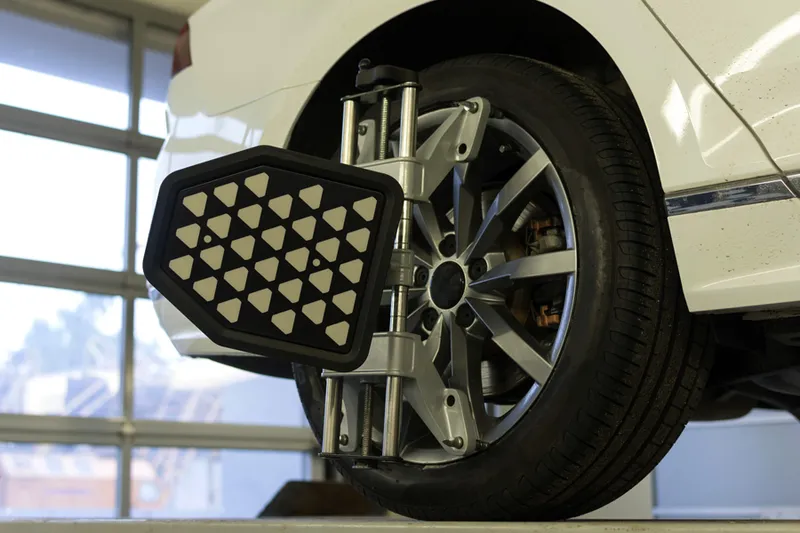
In our workshop we perform 3D geometry using the most modern diagnostic method — read more about the service itself on our workshop services page. Suspect your wheels are “running crooked”? Book a check.