
How to Read the Markings on a Tire
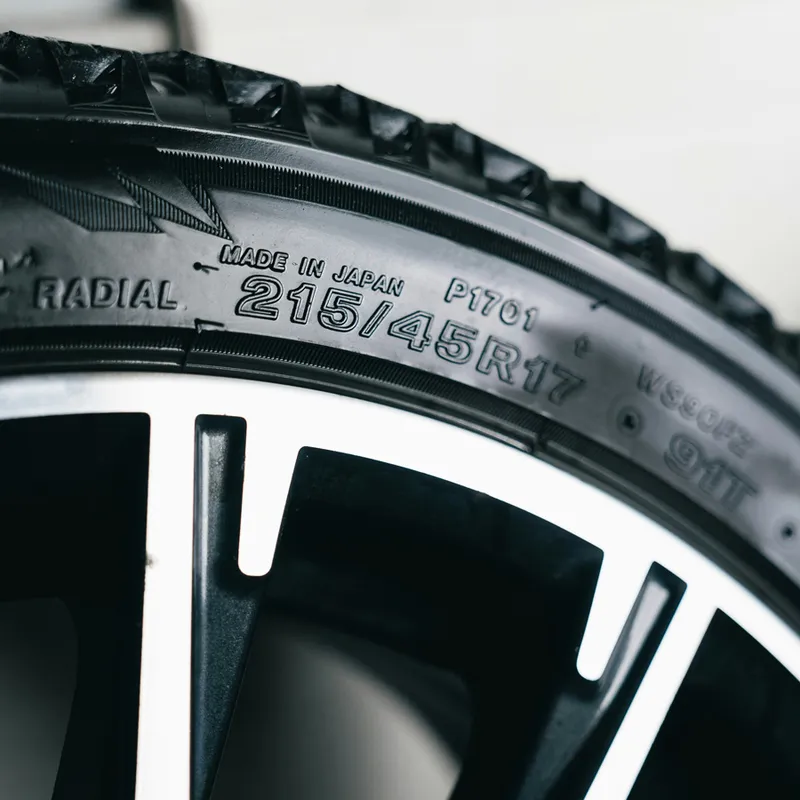
The sidewall of a tire is basically a technical cheat sheet — you just need to know how to read it. Besides the size (e.g. 205/55 R16, which we covered when choosing the right rim), a tire carries a few more markings that have a real effect on whether it actually fits your car.
Load index
The number right after the size and profile (e.g. 91 in 205/55 R16 91V) is the load index — the maximum weight a single wheel can carry at full pressure. The higher the index, the higher the permitted load. Fitting a tire with a lower load index than the manufacturer recommends is dangerous — the tire can overheat and fail under load, especially on longer trips with a full trunk or a trailer.
Speed rating
The letter at the end of the marking (V in our example) is the speed rating — the maximum speed the tire can safely handle when fully loaded. Some common values:
- T — up to 190 km/h
- H — up to 210 km/h
- V — up to 240 km/h
- W — up to 270 km/h
The speed rating must be at least as high as the vehicle manufacturer recommends — lower isn’t allowed, higher is always fine.
Production date (DOT)
The tire sidewall also carries a four-digit code preceded by DOT, e.g. DOT 2324 — the first two digits are the week number, the next two are the year. 2324 means week 23 of 2024, i.e. early June 2024.
This marking matters most when buying used tires, or new tires that have been sitting in storage for a while — rubber ages regardless of whether the tire has ever been driven on. Tires older than 6-8 years from their production date, even with tread left, lose flexibility, and it’s worth considering replacing them.
Why all of this matters
A tire chosen “by eye” might have the right size and still fail to meet the manufacturer’s requirements for load or speed rating — a straightforward path to faster wear, worse handling, and in extreme cases, tire failure on the road.
Don’t want to work out the indexes yourself? Check out our tire offer or get in touch with us — we’ll match a set that meets your vehicle manufacturer’s recommendations.